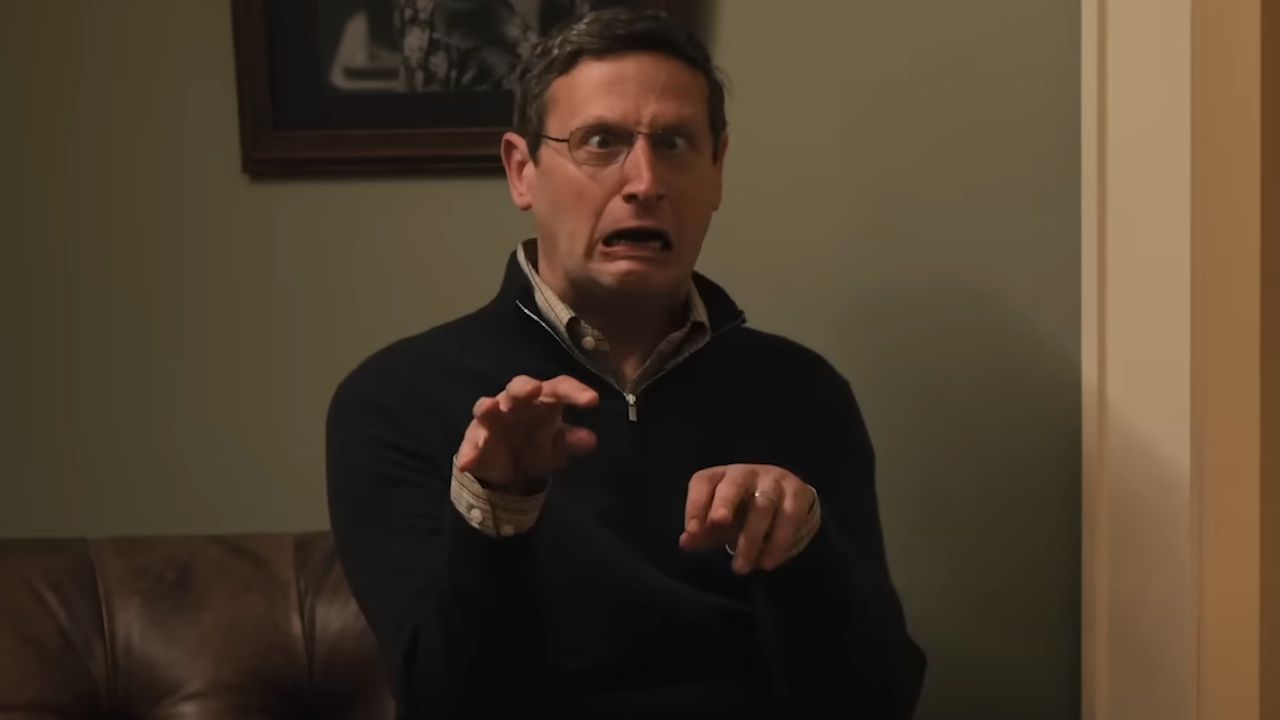
Anytime Tim Robinson’s name comes up, I’ve found that I let out an involuntary groan of, “Oh no” – which is strange, because I actually love his unique brand of comedy. Given what we’ve seen on Netflix’s I Think You Should Leave and in Friendship with Paul Rudd, I have to imagine that level of discomfort is what he’s going for, and fans are about to get a whole new dose of that cringe-inducing goodness with The Chair Company.
Reviews are here for the new HBO comedy series ahead of its release on the 2025 TV schedule, which will see Tim Robinson’s Ron get caught up in an elaborate conspiracy following an embarrassing incident at work. I have seen a few of the episodes already myself, and I have to agree with critics like Chase Hutchinson of The Wrap, who calls the show “more than a little horrifying,” and says it’s Robinson’s most bonkers project yet. He continues:
As he goes from frantically poking around online and making angry phone calls, to going out into the real world and getting in altercations with an eccentric cast of supporting characters (of which Robinson’s fellow SNL alum Jim Downey is the standout), The Chair Company taps into something deeply disquieting about modern conspiracies just as it remains as sharply funny as anything Robinson has ever produced.
Ben Travers of IndieWire rates it a B+, acutely noting that Tim Robinson’s character embodies how easy it is to get lost when you’re desperate to be seen. Ron’s predicament might make you want to scream or possibly even cry, but it will definitely make you laugh. Travers says:
Angie Han of The Hollywood Reporter calls The Chair Company “delightfully unhinged,” writing that like the rest of Tim Robinson’s oeuvre, it’s an intentionally uncomfortable experience. However, its relatability is irresistible in how the show captures what it’s like to have an intrusive thought that you can’t shake, no matter how silly or small you know it is. Han continues:
It feels sometimes as if everyone is an alien wearing a skin suit and trying to mimic human behavior, with varying degrees of success. I mean that specifically about the show, but I’d be lying if I said I’d never felt that about myself or the world around me — and therein lies the draw of The Chair Company. The cringing mortifications and unsettling unreality make the series a tough sit. But for those tuned into the peculiar wavelength put out by Robinson and his collaborators, they’re also what make it irresistible.
Liz Shannon Miller of Consequence gives it a B+, saying The Chair Company proves that Tim Robinson’s unique voice can sustain a full season of television, as he gives his best performance yet. In the critic’s words:
Like so many Robinson-starring projects, there’s such a beautiful precision to some of this dialogue, like Ron explaining a physical confrontation with someone by saying ‘my hand pushed him,’ or musing in a somewhat smug way that ‘I’m right about a lot of things that people have zero clue are going on.’ It’s the sort of thing made possible by a lead actor with such a clear comedic voice, and Robinson does his best job yet of modulating his performance to fit both the most high-strung moments of the story as well as its more grounded moments.
Chris Evangelista of SlashFilm rates the series an 8 out of 10, saying in The Chair Company, Tim Robinson has mastered the art of turning an uncomfortable topic into something uproarious and making a potentially unlikeable man sympathetic. The darkness that lurks beneath the surface only makes the series more interesting. The critic says:
The Chair Company is better constructed than Robinson’s recent film Friendship, which I thought was sporadically funny but slightly uneven. Robinson’s style of humor seems better suited for the medium of TV, and works well in this episodic structure. That said, if you’re not a fan of Robinson’s style of cringe comedy, you likely won’t find anything new in The Chair Company to grab hold of. But if you are a fan of Robinson’s work (as I am) you can expect The Chair Company to send you into near-hysterics.
Do these reviews make you worried about the dark places Tim Robinson’s series might go? As the above critic points out, if his cringe comedy isn’t your thing, The Chair Company isn’t likely to change your mind. However, I do agree that giving the comedian space to develop his character over the length of a series amplifies all of my feelings toward him — from fondness to frustration.
Your Daily Blend of Entertainment News
If you want to check out The Chair Company, the new series premieres at 10 p.m. ET Sunday, October 12, on HBO and can be streamed with an HBO Max subscription. Episodes will be released weekly on Sundays.
Over the years, Ryan Reynolds has discussed some of the stars he admired at a young age, and John Candy is high on that list. In fact, Reynolds admired his fellow Canadian star so much that he even produced a documentary about Candy called I Like Me. That’s not the only way Reynolds has paid tribute to the late Uncle Buck icon, as he also honored him with Easter eggs placed within the Deadpool films. I’d honestly never caught all of these nods but, after learning about them, I find them incredibly sweet.
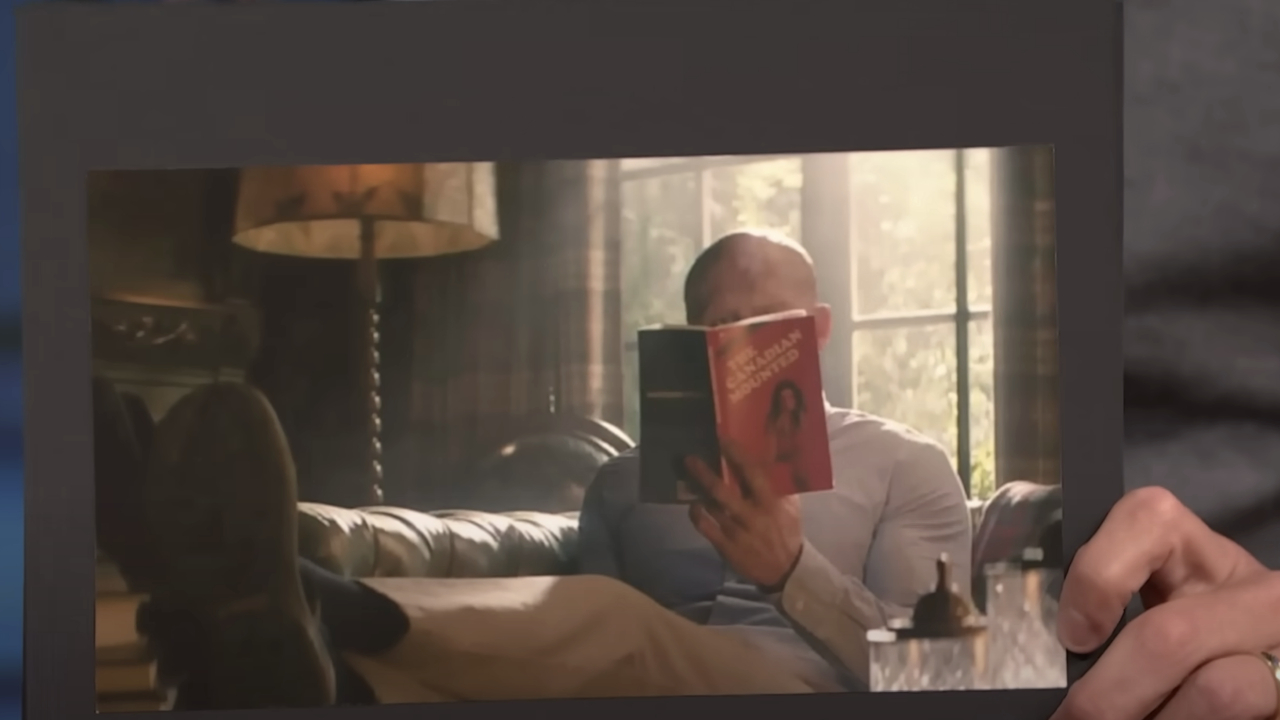
Ryan Reynolds recently appeared on Late Night with Seth Meyers to promote his new documentary. Meyers eventually pointed out that Reynolds peppered references to John Candy throughout the Deadpool trilogy. The first – and I can’t believe I didn’t know Reynolds previously discussed this tribute – is the book The Canadian Mounted. That piece of literature is what Candy’s Planes, Trains and Automobiles character, Del Griffith, reads in the movie. Check out a shot of Wade Wilson reading it in the superhero franchise’s second film:
(Image credit: NBC)
That’s not the only reference to Planes that’s tucked into the Marvel movie series, either. After seeing the Late Night interview (which is on YouTube) I was also surprised to learn that the burnt-out 1983 Chrysler LeBaron convertible that Del and Neal Page use in the film also appears in Deadpool & Wolverine, when the two titular characters traverse The Void. Check it out in the the right-hand corner of the still down below:
People) during a special presentation of the John Candy doc, the Merc with a Mouth also gives an impassioned appeal to Wolverine similar to Del’s “I like me” speech. On that same token, Logan chews out Wade in a way that mirrors Neal’s berating of Del. Reynolds said during the event that in the movie, the adamantium clawed mutant essentially “rips Wade Wilson a new asshole.” (And that’s a spot-on assessment.)
Those references to candy in the Deadpool movies were sweet enough ways for the Free Guy star to honor him, but the documentary is an even better way to do so. Directed by Colin Hanks, the film was seemingly a passionate project for Reynolds and, with the help of Candy’s kids, he and Hanks crafted a sweet film to honor the late star’s memory and get fans in their feelings.
Honestly, the Deadpool flicks hit just a little differently with the knowledge that there are so many references to the work of John Candy. It’s surreal to think that the world has been without Candy’s comedic brilliance for over 30 years now. Despite that, his legacy lives on through his kids as well as fans – including Ryan Reynolds – who continue to pay homage to his work.
Your Daily Blend of Entertainment News
Check out John Candy: I Like Me by streaming it with a Prime Video subscription. Also, grab a Disney+ subscription to stream all three Deadpool movies.
Spoiler alert! This story contains major spoilers for the Grey’s Anatomy Season 22 premiere, which you can stream with a Hulu subscription if you’re not caught up.
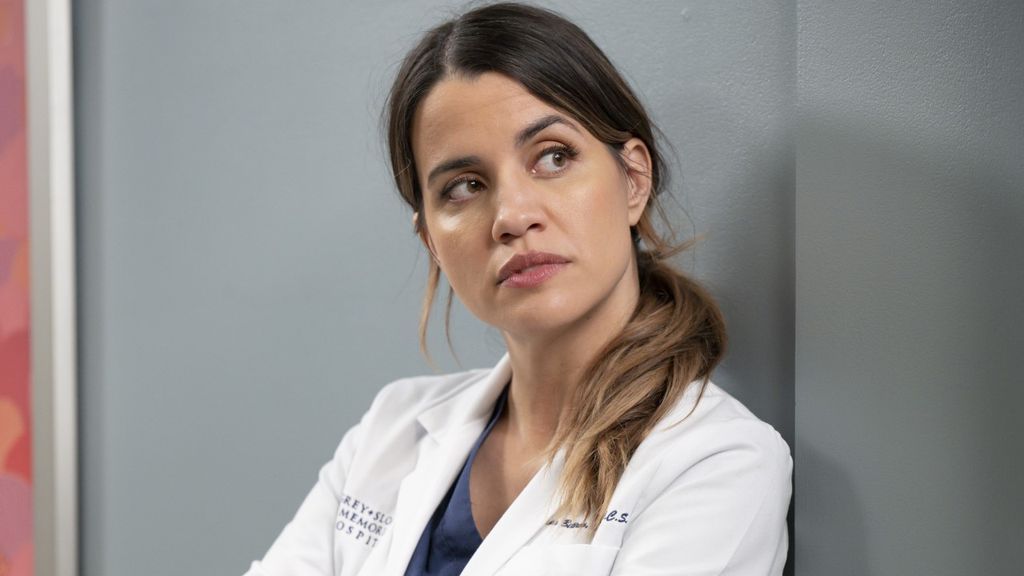
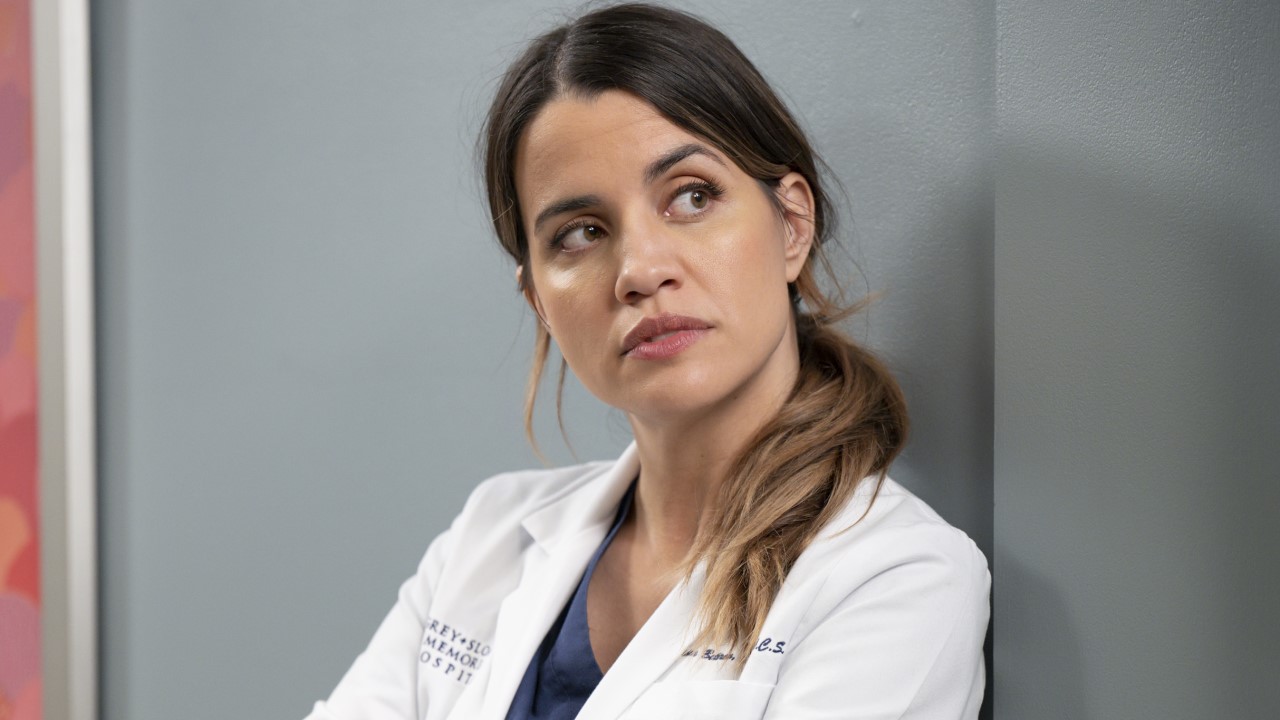
After leaving viewers on a brutal cliffhanger earlier this year, Grey’s Anatomy finally revealed which doctor didn’t survive the hospital explosion when Season 22 premiered on the 2025 TV schedule. Fans were forced to say goodbye to Monica Beltran, after a surgical light fell on top of her, crushing her pelvis. Natalie Morales revealed how she learned of her character’s demise, and she joked that she hopes the surviving doctors are “miserable” without her.
Natalie Morales was a recurring cast member on Grey’s Anatomy for Seasons 20 and 21, with Monica growing close to Winston Ndugu and Amelia Shepherd (Anthony Hill and Caterina Scorsone, respectively). She also served as a mentor to Jules Millin (Adelaide Kane) particularly in “Only the Strong Survive,” and it’s obvious that Monica’s death is going to be hard for them to overcome. That seems just fine to Morales, who joked to THR:
Grey-Sloan doctors to bite the dust and even campaigned to get a plaque that reads, “I DIED ON GREY’S ANATOMY.”
(Image credit: ABC)
It also might help that her death wasn’t completely unexpected. Natalie Morales recalled getting the news from showrunner Meg Marinis, saying:
At the end of last season, none of us knew who was going to make it or not. But I was like, ‘It’s probably me [who dies]. I’m the newest one. I’m not a series regular. There’s a lot of people in that cast.’ Then they called me and asked me to be in this season and to do this episode. And when Meg called me, I was like, ‘Oh, I thought I for sure I was going to be the one you were going to kill off.’ And she was like, ‘Well …’ (Laughs.) So that’s how I found out.
That sounds like a bit of an awkward conversation, to be sure, but at least Natalie Morales wasn’t completely blindsided. It makes sense that she saw her time on the show coming to an end, especially considering its large cast and the fact they were already reducing episode counts for series regulars amid budget cuts.
For the rest of us, though, Monica Beltran’s death was a bit of a shock, as we’d been led to believe in that Season 21 finale cliffhanger that it was Atticus Lincoln (Chris Carmack’s Link) who was given the shaft — as Carmack himself joked about in a recreation of a famous Friends scene. Link did pull through — just barely, though! — and he’s likely looking at a long road to recovery.
Your Daily Blend of Entertainment News
We’ll get to see what that looks like, as well as just how miserable Amelia and Monica’s other former colleagues are when Grey’s Anatomy returns at 10 p.m. ET Thursday, October 16, on ABC and streaming the next day on Hulu.
Aziz Ansari is making his directorial debut with the new film, Good Fortune, and he assembled a strong cast for this 2025 movie release. Joining Ansari in the movie are Seth Rogen, Keke Palmer, Sandra Oh and Keanu Reeves. Before collaborating with his castmates, Ansari admired the work each of them did. However, previous comments made by the comedian suggest he was particularly starstruck by Reeves. It seems their collaboration was actually foreshadowed as well, as Ansari explained to CinemaBlend.
There have certainly been instances in which TV shows have unintentionally predicted real-life events. (The Simpsons, anyone?) When it comes to Ansari and Reeves working together, it seems that was accidentally predicted in some way by the former’s show, Master of None. Ansari caught up with CinemaBlend’s Jeff McCobb to discuss Good Fortune, and MoN came up as well. After discussing a specific Season 2 episode from the show, Ansari shared the story behind a very interesting detail:
Obviously, Keanu Reeves was never in Master of None, but you want to know a fun factoid that I just realized? In that episode, where I was talking about, there’s the cab drivers and the cab drivers are talking about whether they ever picked up any famous passengers. And one guy says, ‘I picked up Keanu Reeves,’ and the other guys are like, ‘No way, you didn’t. He probably takes Uber’ And then this movie has Keanu Reeves! Who would have known?!
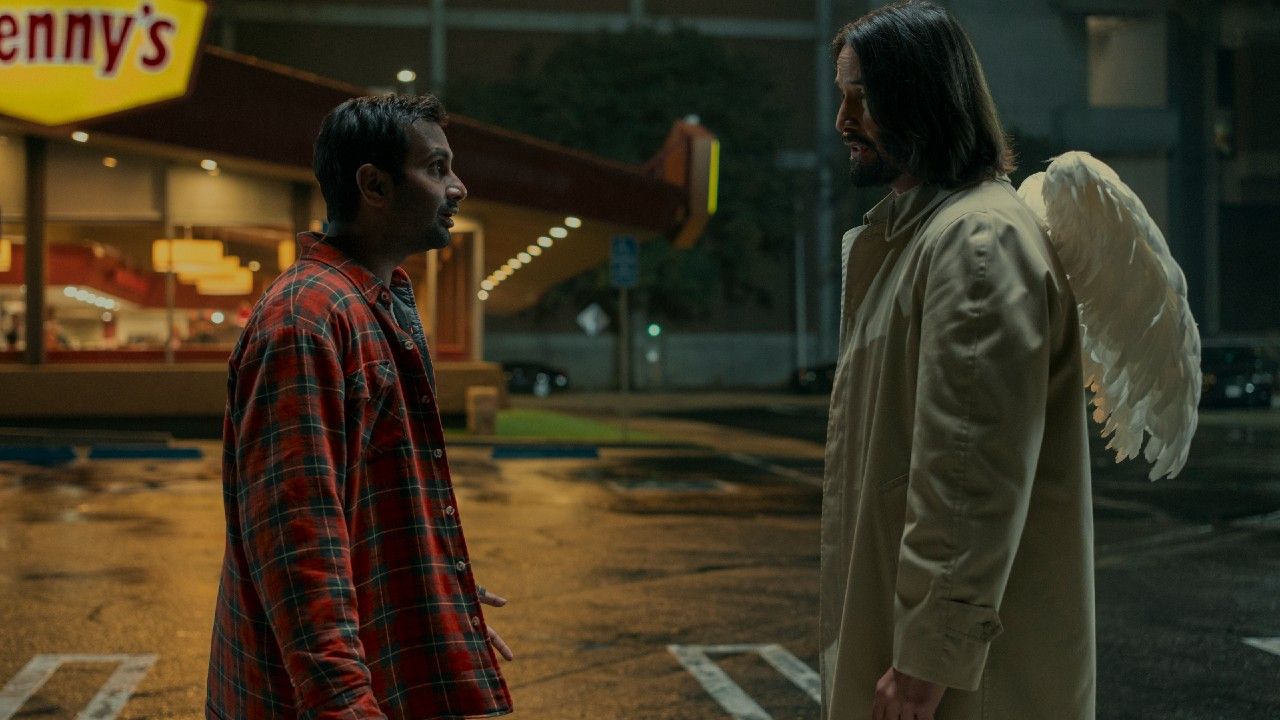
Aziz Ansari and Keanu Reeves to collaborate on than Good Fortune. Both directed and written by Ansari, this supernatural comedy sees Reeves play a “budget guardian angel” who ultimately loses his wings after attempting to help a down-on-his-luck guy (Ansari) via a body swap. The angel is then forced to live as a human and ultimately begins to see the work caused by his prior divine acts of intervention become undone.
Ansari seemed to relish the opportunity to work with Reeves, who he believes is someone with “real movie star aura.” Through his involvement, Reeves apparently “turned the movie into something else,” which “excited” Ansari. It’s long been said that “the Lord moves in mysterious ways” and, whether you’re religious or simply believe in the power of fate, it’s downright delightful that Reeves and Ansari ended up starring alongside each other in this film years after that MoN reference.
Check out Good Fortune when it hits theaters on October 17. In the meantime, grab a Netflix subscription and stream Master of None.
A mega-producer who often has multiple TV series airing simultaneously, Ryan Murphy is currently celebrating the success of Monster: The Ed Gein Story on Netflix, with his network TV offerings 9-1-1 and 9-1-1: Nashville recently debuting on ABC. Plus, there’s the Kim Kardashian-starring legal drama All’s Fair, the anthology Love Story‘s debut, and the Bret Easton Ellis adaptation The Shards. He’s a busy dude, to say the least, but the project of his I’m most excited for is the comic-sourced horror-thriller The Beauty.
Based on the acclaimed comic book series co-created by Jeremy Haun and Jason A. Hurley, The Beauty takes place in a world where a serum is developed that gives users a miraculous new lease on youth and vigor. Of course, miracles come with stiff prices; in this case, anyone who takes the imperfect “beauty” formula is guaranteed both a shortened lifeline and a wildly violent ending, and it’s up to a specialized group of government agents to figure out what’s happening
EW) alongside various cast members, Ryan Murphy offered up a synopsis that points to the dangers invested in the new show’s narrative, saying:
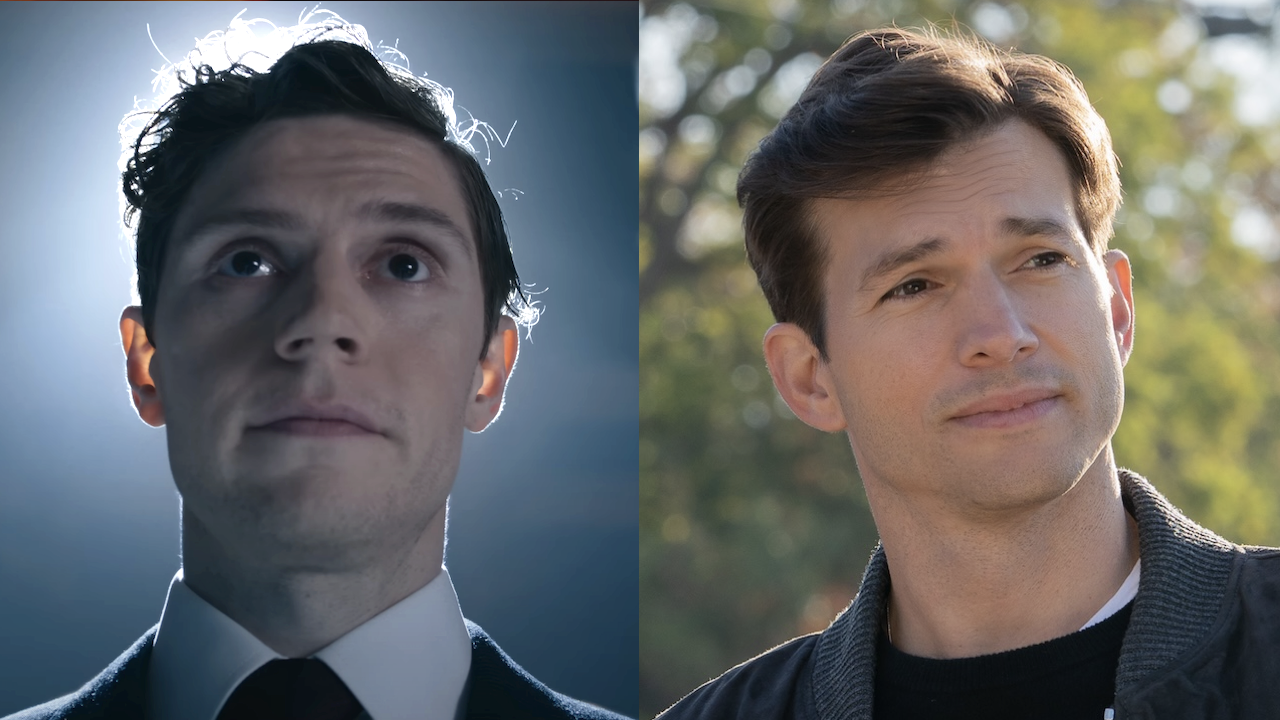
Ashton Kutcher’s character comes in.
(Image credit: Disney, Netflix)
Last seen starring in the 2023 Netflix rom-com Your Place or Mine and cameoing in That ‘90s Show Season 1 with Mila Kunis, Kutcher returns to serialized TV as The Beauty‘s biotech billionaire baddie, even if he isn’t necessarily a villain within his own story, nor to the many people actively seeking out and enjoying the benefits of the age-defying concoction.
Ryan Murphy Makes The Beauty Sound Like Nothing Else On TV
Already, The Beauty‘s storyline is a unique one, even if it may outwardly seem to share similarities with network crime procedurals. But Murphy shared that it truly does mash together all kinds of styles and moods, saying:
[The series incorporates a] combination of really heightened genres. It has amazing action sequences. It has a lot of body horror. It has a great love story. It has a great buddy-comedy thing going on, and it has a great villain.
How many times have you seen a buddy-comedy project that also boasts “a lot of body horror?” The first thing I can think of is Tucker & Dale Vs. Evil, and there aren’t a whole lot of other examples easily following that one. But even that beloved feature didn’t exactly hang on a great love story, and maybe didn’t have action sequences that earned an “amazing” descriptor.
Your Daily Blend of Entertainment News
As well, how many times do we get to see Evan Peters as the hero and Ashton Kutcher as the villain? Never in the same show before now.
Murphy’s explanation also works to describe the comic book, which skews a bit more horror than anything else, which isn’t a genre that most of its stars are known for, from Kutcher to Jeremy Pope to Anthony Ramos. (It also applies to Bella Hadid, who plays one of the unfortunate supermodels mentioned above.) Which just makes me all the more excited, knowing how well-versed Peters is with darker storytelling after earning praise for Monster’s Jeffrey Dahmer and many seasons of American Horror Story, both from Ryan Murphy.
The Beauty doesn’t yet have an official release date locked in, but Murphy indicated that audiences with FX and/or Hulu subscriptions will be able to enjoy all the head-exploding fun during the “third week of January” 2026.
If you ask any rabid fan of horror movies what their favorite sequel is, chances are, they have a choice they love that everyone else hates. It’s the supposed “bad” sequel many wished hadn’t been made, dismissed by critics and mocked by audiences. But a lot of times these so-called “bad” sequels are actually brilliant.
Sure, they’re messy, over-the-top, or tonally offbeat. That’s often the point, though. Even the best horror franchises that have outlived their creators inevitably mutate and shift in tone – there’s good and bad in every series. Even if Rotten Tomatoes says they’re duds, sometimes lightning strikes in the weirdest bottles.
(Image credit: Cannon Releasing)
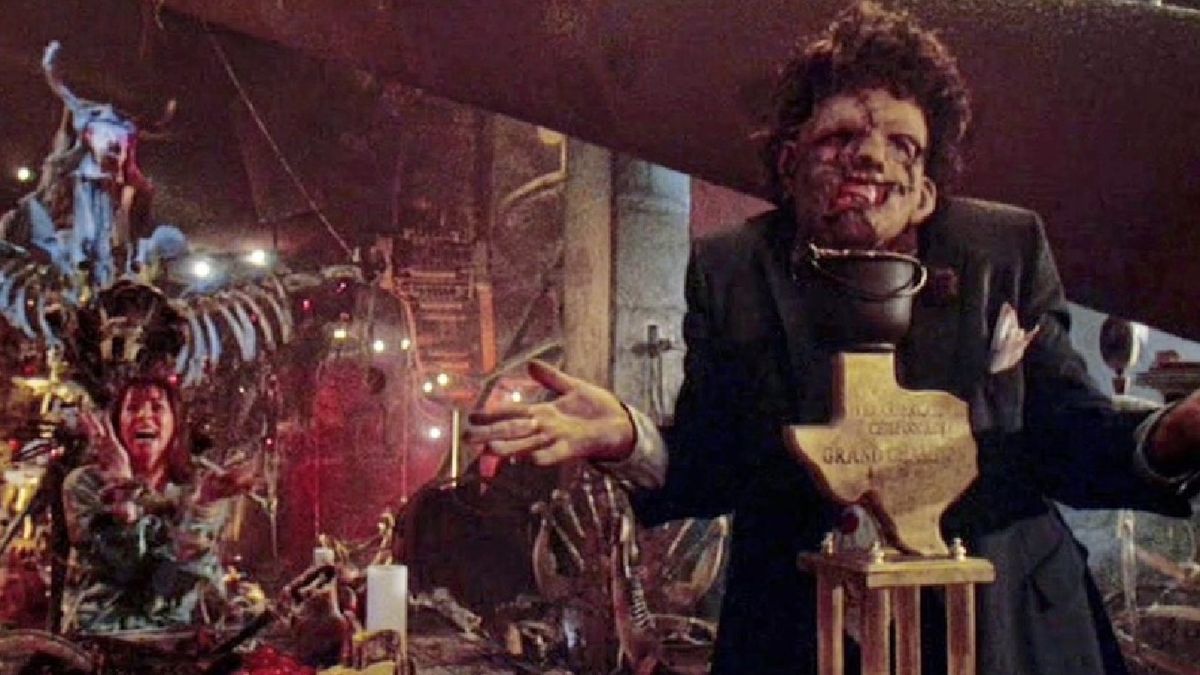
The Texas Chainsaw Massacre 2 (1986)
ranking of the series. The Texas Chainsaw Massacre 2 swaps gritty documentary realism for excessive camp. Leatherface and the Sawyer clan are now living beneath an abandoned theme park, and nothing on screen is subtle. But that’s the point.
most underrated final girls. The film is ugly, loud, and bursting with ideas. It’s punk rock filmmaking at its best.
favorite entry in the OG series. John Carpenter and Debra Hill envisioned the franchise as an anthology, each entry telling a new tale of terror tied to the season.
Season of the Witch was the boldest experiment, as it is a techno-occult conspiracy about killer masks and television brainwashing. Yes, it’s weird. But Tommy Lee Wallace’s direction and Carpenter’s score create a unique tone. Tom Atkins’ chain-smoking doctor is no Laurie Strode, but he embodies a kind of blue-collar doom that fits perfectly with the era’s paranoia.
Had audiences embraced it, we might’ve gotten an entire universe of original seasonal stories instead of two decades of reboots. This movie deserves credit for swinging for the fences, and for making “Happy, Happy Halloween” the creepiest jingle ever recorded.
Your Daily Blend of Entertainment News
David Gordon Green’s trilogy was divisive, though our own Mike Reyes gave it a pretty good write-up with his 4-star review. Fans expecting 110 minutes of Michael Myers carnage got a slow-burning tragedy about the birth of new evil.
That’s what makes Halloween Ends fascinating. It’s less about Myers himself and more about what his legacy does to a town’s new generation. The introduction of Corey Cunningham as a morally gray successor to evil polarized viewers, but it also gave the film a thematic backbone rarely seen in late-franchise entries. It’s messy, ambitious, and deeply human, and Jamie Lee Curtis’ final moments as Laurie Strode feel earned precisely because the film dared to stray from formula. Love it or hate it, Halloween Ends dared to say that evil doesn’t die; it just finds new hosts.
Alien franchiseinto a military-action juggernaut, Alien 3 did the unthinkable and killed off beloved characters in the opening scene. Then David Fincher stranded Ripley on a grimy prison planet populated by rapists and murderers. Fans hated it. But in hindsight, Fincher’s ill-fated debut looks like a haunting eulogy for both Ripley and the genre itself. The film’s nihilism and refusal to offer comfort or closure feel almost transgressive in today’s IP-driven landscape.
Sigourney Weaver’s performance is raw and self-sacrificial, the xenomorph is terrifying again, and Elliot Goldenthal’s score is operatic. Alien 3 isn’t a popcorn sequel, but it is a requiem for survival itself. Fincher famously disowned it, but the bones of greatness were always there. Looking at these movies through a 2025 movie schedule lens, the third entry in this beloved sci-fi franchise feels prophetically grim and fatalistic.
The Blair Witch Project, expectations were sky-high, and Joe Berlinger’s Book of Shadows was too strange, too self-aware, and too cynical for its own time, which is why the franchise has ignored its existence since its release.
Looking back, it’s a brilliant deconstruction of fame and the commodification of horror. The film isn’t about witches at all; it’s about how people warp reality to fit a narrative. The real evil is the obsession with true crime and with the internet. That feels pretty prescient to me. Sure, it’s a clumsy sequel, with the studio mangling the editing, but its DNA is pure early-2000s media paranoia. Watch it and you’ll see it predicted YouTube horror and online conspiracy culture years ago.
Hitchcock’s cinematic masterpieces, made 23 years later, by a different director? And yet, it’s one of the smartest horror continuations ever made.
Anthony Perkins returns as Norman Bates, who’s just been released from an asylum and is trying to live a normal life. The truly horrific thing isn’t Norman’s madness, but how the world refuses to let him recover. Richard Franklin’s direction is full of genuine empathy, turning the slasher formula on its head. The director makes Norman the victim, but by the time the twist comes, it’s less shocking than tragic. It’s the rare sequel that deepens the original without desecrating it, and that ought to count for something.
Friday the 13th franchise as a whole, and it plays like a grimy giallo-inspired slasher with an identity crisis (literally). It’s sleazy and occasionally unhinged in ways that feel more Twin Peaks than Camp Crystal Lake.
The fake-out killer twist still divides fans, but A New Beginning nails the series’ actual theme of the cyclical trauma of violence. Tommy Jarvis’ PTSD and fractured psyche add depth that most slashers avoid entirely.
1989 original adaptation of Pet Sematary was dismissed as a tonal mess. But, beneath the camp lies a surprisingly sharp portrait of adolescent rage and loss.
Edward Furlong’s performance as Jeff, a boy mourning his mother’s death, taps into the same emotional rawness that made Terminator 2 work. Clancy Brown, as the resurrected stepdad-from-hell, delivers one of horror’s all-time great villain turns–the motorcycle kill is worth the price of admission alone! Lambert injects absurd humor into the carnage, and sure, I won’t argue it’s high art, but it has soul.
These Sequels Aren’t Bad, Just Misunderstood
The truth is, most so-called “bad” sequels aren’t disasters but misunderstood experiments. They’re what happens when filmmakers try to stretch a story’s mythology or take it in unexpected directions, which sometimes means switching genres or making bold choices nobody asked for. And sure, those risks don’t always pay off, but when they do, the results can be weirdly awesome.
So, the next time someone tells you Psycho II or Halloween III “ruined” the franchise, remember that horror thrives on mutation. Sometimes, the monsters we love need to evolve, or die trying.